Serving South FloridaFlorida Licensed & Insured
    info@southerncoastenterprises.com1.800.585.5132
    Southern Coast Enterprises, Inc.
    Talk to a roofer954.426.3312Free Estimate

    High-Rise Roofing

    At height,
    the job changes.

    On a tall building the roofing system is rarely the hard part — getting crews, material, and debris on and off an occupied building is. Southern Coast is a family-run, licensed, and insured South Florida roofing and waterproofing contractor with over 33 years of experience.

    Request a roof evaluationCall 954.426.3312
    33+ YearsRoofing experience
    OccupiedRe-roofs from several to several hundred units
    Factory CertifiedBy most leading manufacturers
    7 SystemsAcross one building if needed

    [ High-Rise Overview ]

    Roofing a building
    you cannot walk onto.

    A tall building uses the same roofing systems as any other commercial property. What is different is everything around them: how the crew gets up there, how the material follows, where the old roof goes, and what is happening on the balconies below while it all takes place.

    That makes a tall-building re-roof a logistics project with a roofing system inside it. Access, staging, and sequencing are settled with building management before material is ordered, because on a tall building those decisions drive the schedule far more than the roofing itself does.

    • Condominium associationsBoard-level projects on shared roofs with many owners.
    • Property managersA contractor that will talk to residents, not just to you.
    • Building ownersMid-rise and high-rise commercial and residential towers.
    • Oceanfront propertiesBuildings taking wind and salt exposure at height.

    [ Access & Logistics ]

    Six problems
    height creates.

    None of these are roofing problems, and all of them shape a tall-building re-roof. They are worth understanding before you compare proposals, because they are where the differences between contractors usually sit.

    01

    The roof is a long way up

    Crew access and material routes have to be agreed with the building before work starts — which stair or service elevator, at what times, and what needs protecting along the way. Material generally has to be hoisted and staged on the roof rather than carried up.

    02

    There is nowhere to put anything

    Tall buildings rarely have a lay-down yard. Staging, loading, and dumpster positions need settling with management in advance, and deliveries want scheduling against the work so material is not sitting in a drive lane for a week.

    03

    Everything below is occupied

    Balconies, walkways, pool decks, and entrances sit directly under the work. Perimeter protection, debris control, and pedestrian routing beneath the work area belong in the plan rather than being improvised once the job starts.

    04

    The weather window is shorter

    Wind and rain arrive faster and hit harder at height, and an open roof several floors up is not somewhere to be caught out. That argues for phasing tear-off into areas that can be dried in before the crew leaves site.

    05

    Wind uplift is greater up there

    Height and proximity to the water change what the assembly has to resist, and the corners and perimeter take the worst of it. Attachment and edge detail need specifying for the building's own exposure.

    06

    The building cannot stop working

    Residents still need lifts, parking, and their front door. The sequence has to fit how the building actually runs, and management needs enough notice to tell owners what is happening above them and when.

    Planning a tower re-roof? Talk it through with us before it goes out to bid — these are the questions worth putting to every contractor you ask.

    Request a roof evaluation

    [ Occupied Towers ]

    People live
    under the work.

    Southern Coast has re-roofed many occupied projects, from buildings of several units up to several hundred. On a tower that means hundreds of residents who did not choose the schedule and still have to get on with their week.

    Handling that well is mostly communication and sequencing — a phased schedule the board or manager can circulate, residents knowing which areas are affected and when, and a crew working to that plan rather than deciding each morning where to start.

    Phased by area

    The roof is divided into sections so each area is opened and closed within a planned window.

    A schedule to circulate

    Management needs enough detail to notify owners and tenants ahead of each phase.

    Dried in daily

    Open areas want closing up before the crew leaves, so a storm is not an interior problem.

    Protected below

    Balconies, decks, and entrances under the work area need shielding and keeping clear.

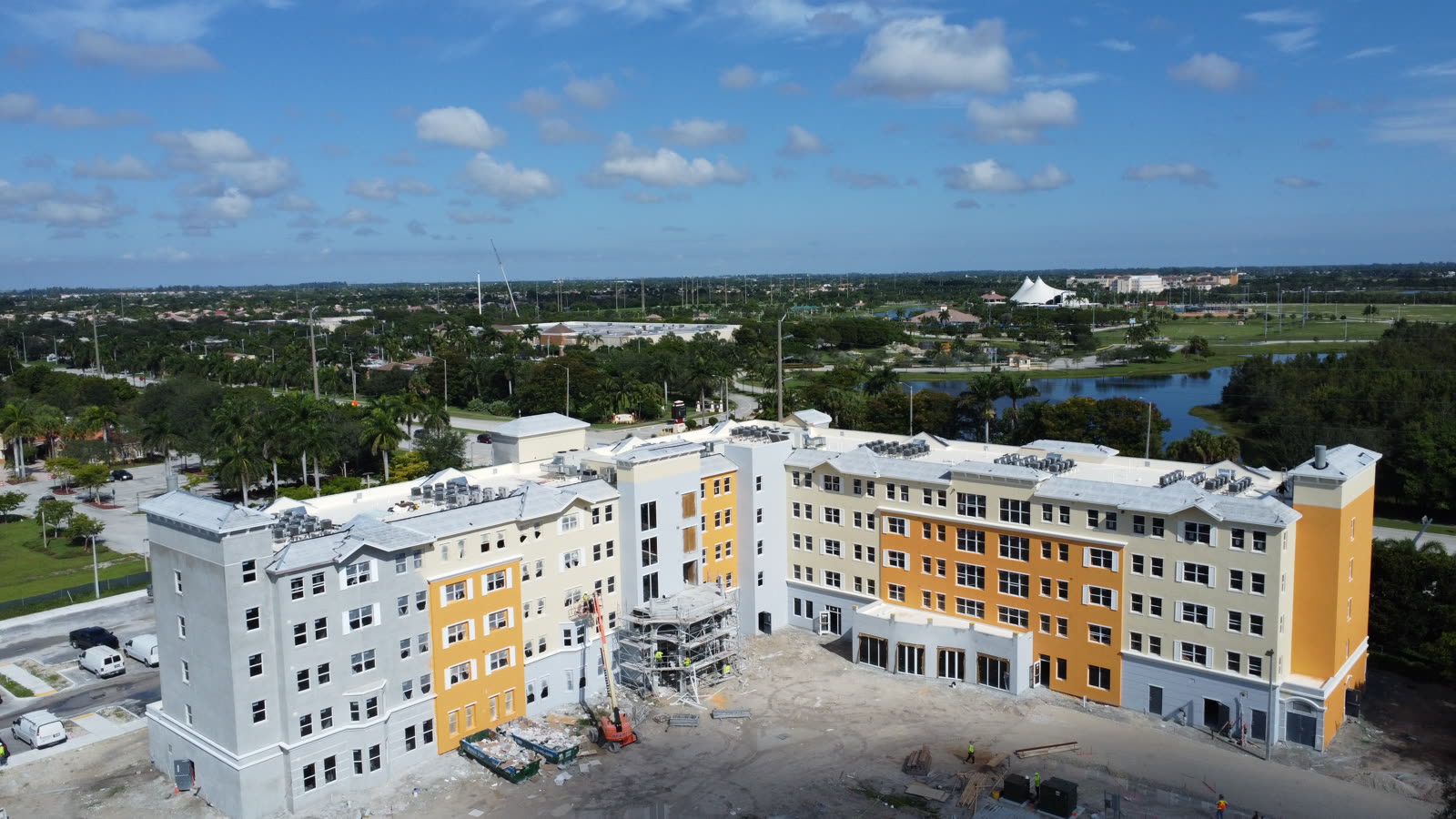
    Roofing crew installing a low-slope roof on an occupied oceanfront high-rise

    [ High-Rise Systems ]

    Confirmed systems
    and ongoing service.

    The options below use the client's confirmed commercial list. Final recommendations depend on the property, existing assembly, and project requirements.

    Roofing systems

    Commercial membrane systems

    • TPO
    • Modified Bitumen
    • Single Ply Roofing Systems
    • Built Up Roofing Systems
    • PVC
    • EPDM
    Additional options

    Client-provided categories

    • Lightweight
    • Tapered Insulated
    • Coating and Waterproofing
    Ongoing care

    Inspection and maintenance

    • Inspections
    • Maintenance
    • Yearly Service

    Every building is different. Southern Coast will inspect the property, explain the available options, and outline the appropriate scope before work begins.

    Commercial systems & services

    [ Why Southern Coast ]

    Not every roofer
    can take a tower.

    Work at height asks for a contractor with the crews, the certifications, and the willingness to plan a project properly before starting it. Here is what Southern Coast brings to that conversation.

    In-house crews

    The work is carried out by Southern Coast crews rather than passed to a subcontractor, so the standard on a tower is the one we set ourselves.

    Factory certified

    Certified by most leading coating and roofing product manufacturers, which is what lets a manufacturer system go on to its own specification.

    Occupied-building experience

    Southern Coast has re-roofed many occupied projects, from buildings of several units up to several hundred.

    Coastal exposure

    Three decades of South Florida work, on buildings that take wind and salt. Attachment and edge detail get specified for the exposure the building actually has.

    Not tied to one manufacturer

    A tower usually needs several systems working together. Being manufacturer-flexible means each area gets what suits it.

    Roofing & waterproofing

    Both disciplines under one contractor, which matters on a tower where the roof, the parapets, and the balconies are one water problem.

    Related services

    [ Request an Estimate ]

    Let us survey
    the tower.

    Tell us about the building — roughly how tall, how it is roofed now, and what is prompting the conversation. We will survey the roof and come back with a specified scope and a phasing approach you can take to an owner or a board.

    Request a roof evaluationToll-free 1.800.585.5132

    Factory certified · Licensed & insured · Over 33 years of experience